
Young Learners at Chisambe Primary Taking the Lead in Disaster Preparedness
Before the introduction of structured disaster risk management (DRM) initiatives, schools in Mulanje and Phalombe, some of Malawi’s most disaster-prone districts, often found themselves reacting to crises rather than preparing for them. Floods would come, cyclones would sweep through, and learning would be disrupted, sometimes for weeks.
At Chisambe Primary School in Mathambi Zone in Mulanje, these realities were not just stories; they were lived experiences. Learners, like many in the district, had limited knowledge on how to respond during disasters or how to protect their environment to reduce risks. The school environment, while vibrant with young minds, lacked coordinated efforts to build resilience against the very real threats posed by nature.
Through the Girls Get Equal (GGE) 2.0 – Realising Rights and Building Resilience project implemented by Plan International Malawi in partnership with CRECCOM and Point of Progress, with financial support from the Norwegian Agency for Development Cooperation (NORAD), a proactive shift was introduced.
Disaster Risk Management (DRM) clubs were established in impact schools, including Chisambe Primary, alongside targeted training for teachers responsible for guiding these clubs. Learners are now being equipped with practical knowledge on environmental conservation and safety measures during disasters such as floods, cyclones, and even earthquakes. In a district like Mulanje, where nature can be both beautiful and unpredictable, this knowledge is proving invaluable.

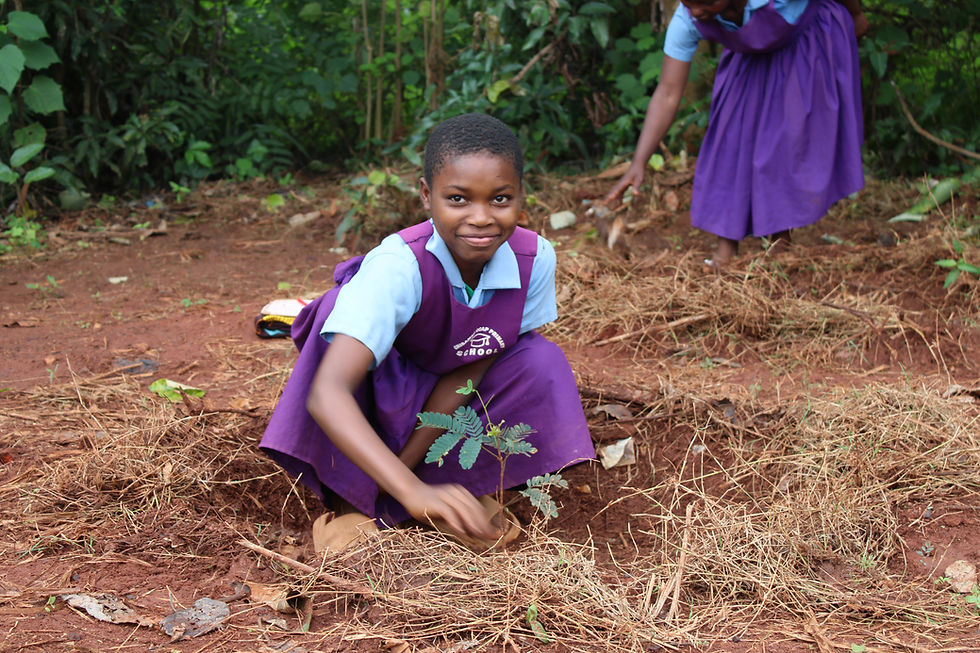
At Chisambe Primary, the DRM club has quickly grown into a hub of action and enthusiasm. With support from an empowered School Management Committee (SMC), the club received 350 tree seedlings; now lovingly planted across the school grounds.
Among these are Kesha and Mtangatanga tree species, carefully nurtured by the learners themselves. It is a sight to behold: young hands watering seedlings, checking on their growth, and proudly pointing out “their” trees as if introducing close friends. And in many ways, they are; these trees represent protection, shade, and a greener, more resilient future.
DRM Club Patron at the school, Godfrey Makoloma, explains that the initiative has transformed how learners think about their environment. “They are no longer passive,” he says. “They understand that planting trees helps prevent soil erosion and reduces the impact of floods. They see themselves as part of the solution.”
His counterpart, Matron Edith Majiga, adds with a smile, “And they take it seriously! If a tree looks thirsty, you will see a learner running with a bucket before you can even say ‘rain season.’”

Beyond the humour and energy lies a deeper impact. Learners are gaining life-saving knowledge; understanding where to go during floods, how to respond during emergencies, and why protecting the environment is critical.
The school structures, including the SMC, are actively supporting these efforts, ensuring that the initiative is not a one-time activity but a sustained practice. The trees themselves stand as a living symbol of this commitment; their roots go deeper each day, just like the knowledge being instilled in the learners.


Comments