
Learners Receive Tailored Scholastic Support Under Girls Get Equal 2.0 Project

More than 300 learners in Mulanje and Phalombe districts have received tailored scholastic support through the Girls Get Equal (GGE) 2.0 Project, a consortium initiative implemented by Plan International Malawi, Creative Centre for Community Mobilisation (CRECCOM) and Point of Progress (POP) with financial support from the Norwegian Agency for Development Cooperation (NORAD).
The distribution reached 150 learners in Mulanje and 150 learners in Phalombe, with each learner receiving a package of educational materials based on their individual needs. The support included school bags, exercise books, notebooks, pens, pencils, mathematical instruments, sanitary pads, sunscreen lotion and other essential learning materials to enhance participation in education.
Prior to the distribution, CRECCOM facilitated community sensitisation meetings to explain the transparent and inclusive criteria used to identify beneficiaries. The sessions brought together district education officials, Primary Education Advisors (PEAs), school management committees, school structure committees, parents and community leaders, reinforcing the project's commitment to fairness, accountability and community ownership.
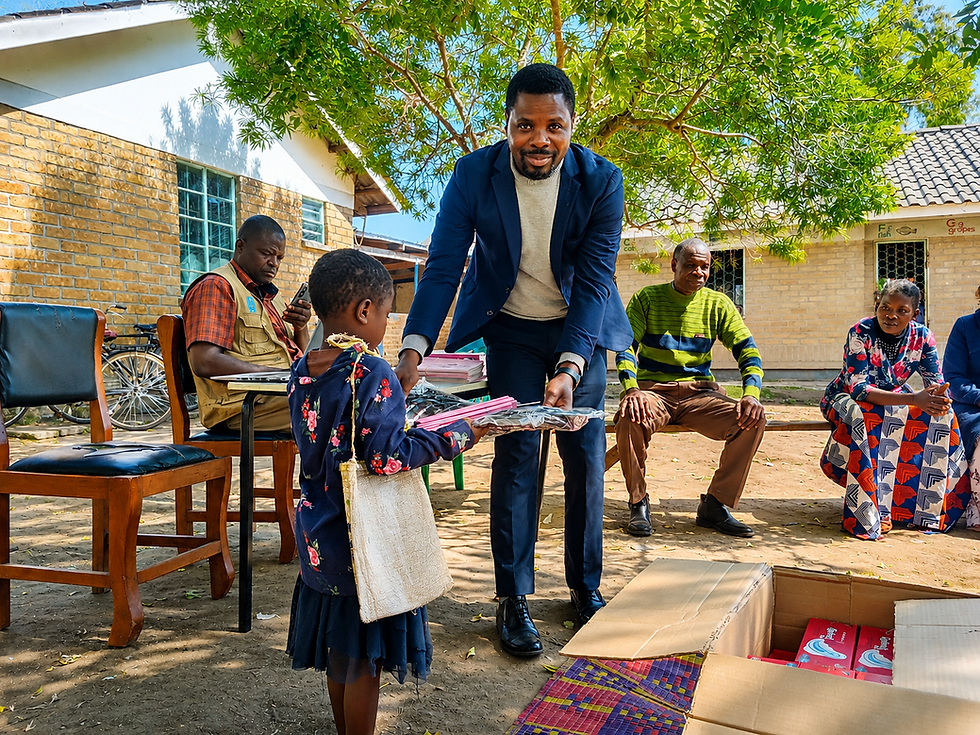
In Mulanje District, the distribution covered learners from Chifide, Kachere 2, Kamwendo, Chilera, Luangwa, Chinyama and Mitawa primary schools, as well as Nakamba and Mitawa Complementary Basic Education (CBE) centres, among other learning institutions.
In Phalombe District, beneficiaries were drawn from Baani, Bona, Carmushka, Chisengereni, Chitekesa, Chithumbwi, Chitokolo, Dzanjo, Khongoloni and Likanani primary schools, together with Phweremwe and Mwambeni CBE centres.

CRECCOM Director of Programmes, Levison Lijoni, said the intervention goes beyond providing learning materials by helping create an environment where every learner has an equal opportunity to succeed.
"Education is one of the most powerful tools for transforming lives. Through Girls Get Equal 2.0, we are working with communities and education authorities to remove barriers that prevent children from participating fully in education. By ensuring that learners receive support according to their individual needs and by maintaining a transparent beneficiary selection process, we are promoting equity, dignity and accountability," said Lijoni.


Mulanje Coordinating Primary Education Advisor (CPEA), Adam Nyakuleha, commended the consortium partners for complementing government efforts to improve access to quality education.
"The support provided through this project will make a significant difference in the lives of many learners. The transparent approach used to identify beneficiaries has strengthened community confidence in the project, while the learning materials will help improve attendance, learner participation and retention in our schools," said Nyakuleha.
The Girls Get Equal 2.0 Project is designed to address the barriers that limit equitable access to education, particularly for girls and other learners facing multiple challenges.
The scholastic support is expected to improve school attendance, strengthen learner retention, enhance confidence and participation in class, and contribute to better learning outcomes across participating schools.


Comments